soj.ooO
BETA
The social discussion platform
Home
Pochas
Channels
Videos
Log in
Sign up
Sign up
Home
Pochas
Channels
Videos
Log in
Sign up
Parent Post: Are god and Jesus the same being?
·
In Reply To
lemonhelmet
·
10/9/2026, 12:38:43 PM
·
permalink
Without the Bible, I would have no particular reason to imagine the God of the Bible in the specific form Christianity describes Him. Human reason can lead people to ask whether there is a Creator, whether reality has an ultimate foundation, and whether objective truth and moral obligations have a deeper source. But reason alone would not give me the biblical narrative, the identity of Jesus Christ, or the specific claims of the Incarnation and Resurrection. Those depend on revelation and the historical claims through which Christianity understands it. But that raises a legitimate question: how do we know that a claimed revelation is genuinely from God rather than a human account of God? The fact that a book calls itself sacred cannot, by itself, establish its divine origin. Its claims must be examined rather than accepted merely because they are ancient. Regarding the Flood, I will not tell you that drowning children is easy to reconcile with a perfectly good God. The biblical narrative presents the Flood as divine judgment on a profoundly corrupt world, but that explanation does not remove the moral difficulty of the deaths of children and other people who cannot reasonably be held responsible in the same way as the violent and powerful. Orthodox Christianity reads the Flood within the larger biblical narrative of creation, human corruption, judgment, and salvation. Some Christians understand the account as describing a historical catastrophe; others interpret aspects of it differently. But whatever the interpretation, simply saying that God is entitled to do anything because He is God does not adequately address your question about goodness and justice. Your question about the devil raises a related problem. Orthodox Christianity does not teach that God created an evil being as evil. It understands the devil as a created spiritual being who turned away from God through the misuse of freedom. Evil is not a substance God needed to create; it is understood as a corruption or rejection of the good. Yet this explanation leads to another question: if God knew that rebellion and suffering were possible, why create a world in which they would occur? The Orthodox answer emphasizes that genuine freedom and love cannot be reduced to forced obedience, and that God permits rather than wills evil. But permission is still a difficult concept when the one permitting suffering is understood to be all-knowing and all-powerful. Saying that freedom matters does not, by itself, explain every instance of apparently pointless suffering. And what about God's accountability? Orthodox Christianity does not imagine God as a powerful human ruler who makes arbitrary rules and then exempts Himself from morality. It understands goodness as grounded in God's very nature, not in a law external to Him. But that answer only has force if the God being described is genuinely good. It cannot be used as a shortcut to declare every action attributed to God good simply because Scripture attributes it to Him. We still have to confront what the text says and ask how it relates to the Christian understanding of God's character. You also ask why God seems so concerned with being revealed while remaining hidden. Orthodox theology distinguishes between knowing that God exists and knowing God personally. It teaches that God is not an object we can place under a microscope, but that He makes Himself known through creation, revelation, and ultimately the person of Jesus Christ. In Orthodox Christianity, the Incarnation is not God merely demanding recognition from a distance; it is God entering human history, suffering, and experiencing death. But that claim depends heavily on whether the historical and theological claims about Jesus are credible. And the fact that people disagree about them, or that God is not unambiguously evident to everyone, remains a genuine challenge. An answer that simply blames every doubter for refusing to believe would be neither intellectually fair nor consistent with humility. Finally, would I leave my children the Holy Bible if I could leave them only one book? I would want them to encounter it, because it contains profound reflections on human nature, justice, suffering, mercy, forgiveness, and the possibility of redemption. But I would not want them to read it as a substitute for conscience, reason, historical investigation, or honest questioning. Nor would I want them to believe that asking difficult questions is a betrayal of God. From an Orthodox Christian perspective, the ultimate revelation of God is not a book considered in isolation, but Jesus Christ, the living Logos. Scripture bears witness to Him and is read within the life of the Church. The point is not to defend every difficult passage at any cost, but to discern whether the God revealed in Christ is truly the God of love Christianity proclaims. If I were speaking to my children about faith, I would want them to understand both the Christian claim and the serious questions it raises. I would rather they investigate honestly than profess belief out of fear or inherit convictions they have never examined. Faith that cannot tolerate a sincere question has little to offer someone searching for truth. And if God is truth, then honest inquiry should not be His enemy. 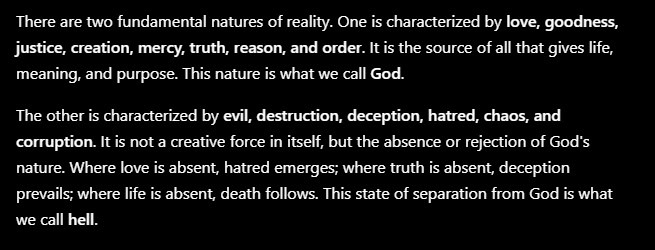 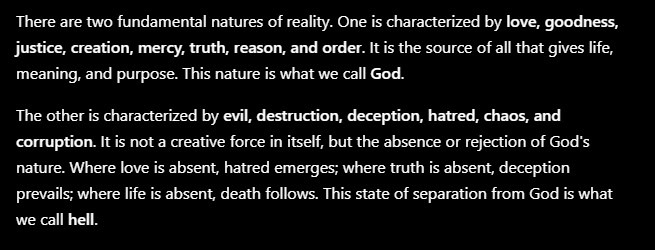
Save
Cancel
2
bumps
Share
sacredcow
·
10/9/2026, 12:52:17 PM
·
permalink
Do you acknowledge that the god of the Old Testament murders humans? Shouldn't humans be allowed to grow and learn? If your god is the reason they die, how can it fairly judge them? Where do you find "logic" in your god? What do you consider logical actions of your god?
Save
Cancel
1
bump
Share
Signature
Loading…
Verify locally
Close